
Transition Assistance Program
The TAP Team
Milton "Mick" Mahon, MBA/HRM
TAP Manager - Air Base
Michelle Bruce MBA, AFC
TAP Manager - Weapons Station
David Alderman
Dori Cambron
Isley Pulliam
Justin Harper
Kendra Jackson
FAQs
Have questions about separation, retirement, Capstone, or timelines? You’re not alone! We’ve gathered the most common TAP questions to help you feel confident and prepared.
👉 Explore our TAP FAQs
TAP Events
Looking for a class or workshop near you? Click HERE!
Starting Your BDD Claim Key Facts
Eligibility Requirements:
- Must file between 180 to 90 days before separation or retirement.
- Must be available for examinations for at least 45 days after submission.
- Cannot have a pre-discharge hospitalization or surgery requiring further treatment.
- Cannot file if they are awaiting discharge for misconduct or dishonorable conditions.
Key Steps to Prepare:
- Gather Medical Documentation – Include all service treatment records, medical evidence of conditions, and supporting civilian medical records.
- Separation Health Assessment – Part A
- VA Form 21-0781 – Statement in Support of Claimed Mental Health Disorder(s) Due to an In-Service Traumatic Event(s)
- Identify Disabilities to Claim – Consider all service-connected conditions, including physical and mental health issues.
- Complete VA Form 21-526EZ – The Application for Disability Compensation must be filled out accurately.
- Enroll in eBenefits or VA.gov – This helps track claim status and manage VA benefits.
- Schedule VA Medical Exams – The Compensation & Pension (C&P) exams will be required for evaluation.
- Submit Claim Online – The fastest way to process is through VA.gov.
Additional Considerations:
- Claim all conditions at once to avoid delays.
- Use VA-accredited assistance (such as VSOs, DAV, or VFW) for guidance.
- Keep copies of all submitted documents.
- If outside the BDD eligibility window, the service member may still file a standard disability claim post-separation.
SkillBridge Resources
Click on the links below to learn more.
Employment Resources
Click on the links below to learn more.

Program Overview
The Transition Assistance Program (TAP) is a comprehensive initiative designed to support military service members as they navigate the shift from military to civilian life. Focused on providing essential resources and information, TAP addresses key aspects such as employment, education, and healthcare, aiming to facilitate a smooth and successful transition for individuals leaving the armed forces. Through workshops, counseling, and access to valuable tools, TAP plays a vital role in equipping veterans with the skills and knowledge needed to thrive in their post-military endeavors.
What is Transition?
Transition is a phase of adaptation that involves planning and preparation during military service. It’s the time when service members and their families venture into civilian life after leaving active duty. TAP, a collaborative effort involving the Department of Defense, Department of Labor, Department of Education, Department of Veterans Affairs, Department of Homeland Security, along with the Small Business Administration and the Office of Personnel Management, aims to support this journey by providing essential resources and guidance.
Program Mandates & Components
STEP 1: Individualized Counseling
Must be completed no later than 365 days prior to separation or retirement.
This is the official start to the TAP process, where a personal self-assessment is completed to identify post-transition goals, an Individual Transition Plan (ITP) is started, and the service member is assigned a tier level. This must be completed no later than 365 days before separation or retirement.
See “TAP Tiers” on the right.
STEP 2: Pre-Separation Counseling
Must be completed no later than 365 days prior to separation or retirement.
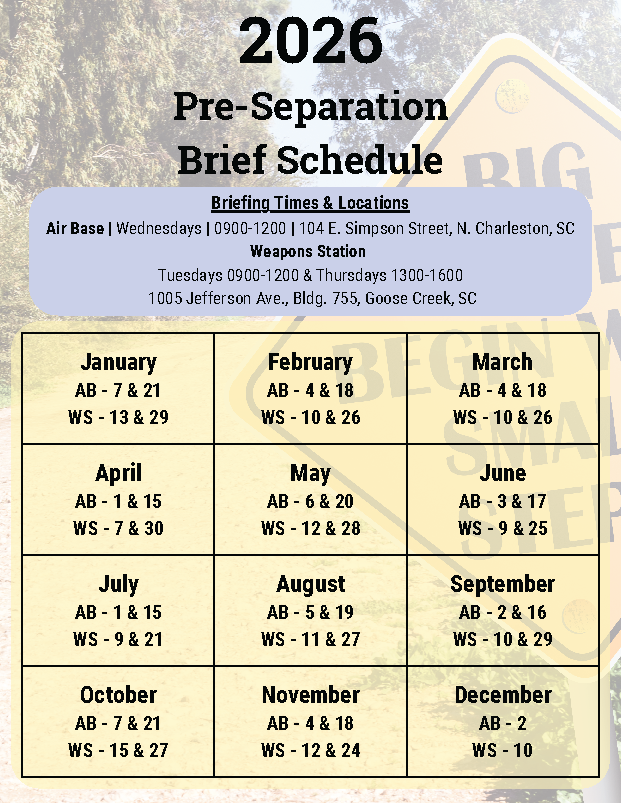
Following the IC, this briefing provides a high-level overview of available benefits, entitlements, and resources to help the service member develop their ITP. Caregivers and spouses are encouraged to attend this pre-separation briefing.
STEP 3: TAP Workshops
The TAP Core Curriculum: All service members must complete the foundational three-day workshop, which includes:
DoD Transition Day: The DoD Transition Day is a mandatory eight-hour curriculum that includes the following modules:
Manage Your (MY) Transition – The “Manage Your Transition” workshop is a targeted program within the Transition Assistance Program (TAP) that equips military service members with practical skills for a successful shift to civilian life. Through interactive sessions and expert guidance, participants gain insights into resume building, job searching, and effective communication, empowering them to navigate the complexities of the civilian job market with confidence.
Military Occupational Codes (MOC) Crosswalk – The Military Occupational Codes Crosswalk workshop is a specialized component of the Transition Assistance Program (TAP) that helps service members translate their military skills and experiences into civilian terms. Through this workshop, participants learn to identify transferable skills, align their military occupations with civilian career paths, and enhance their marketability in the civilian job market.
Financial Planning for Transition – The Financial Planning for Transition workshop, part of the Transition Assistance Program (TAP), provides service members with crucial insights into managing their finances as they shift from military to civilian life. Participants gain practical knowledge on budgeting, savings, investments, and navigating benefits, empowering them to make informed financial decisions during and after their transition.
VA Benefits and Services Briefing: A one-day interactive briefing designed to enable transitioning Service Members (TSMs) to make informed decisions regarding the use of VA benefits. All members must also create an account on VA.gov and obtain a DS Logon.
DOL Employment Fundamentals of Career Transition (EFCT) Workshop: Focuses on job search skills, resume writing, networking, and labor market research. It a key component of the Transition Assistance Program (TAP), aimed at preparing military service members for successful civilian employment. This course covers essential employment skills, including resume writing, job search strategies, and interview techniques. Through practical guidance and interactive sessions, participants gain valuable insights to confidently navigate the job market and secure fulfilling employment opportunities in their transition to civilian life.
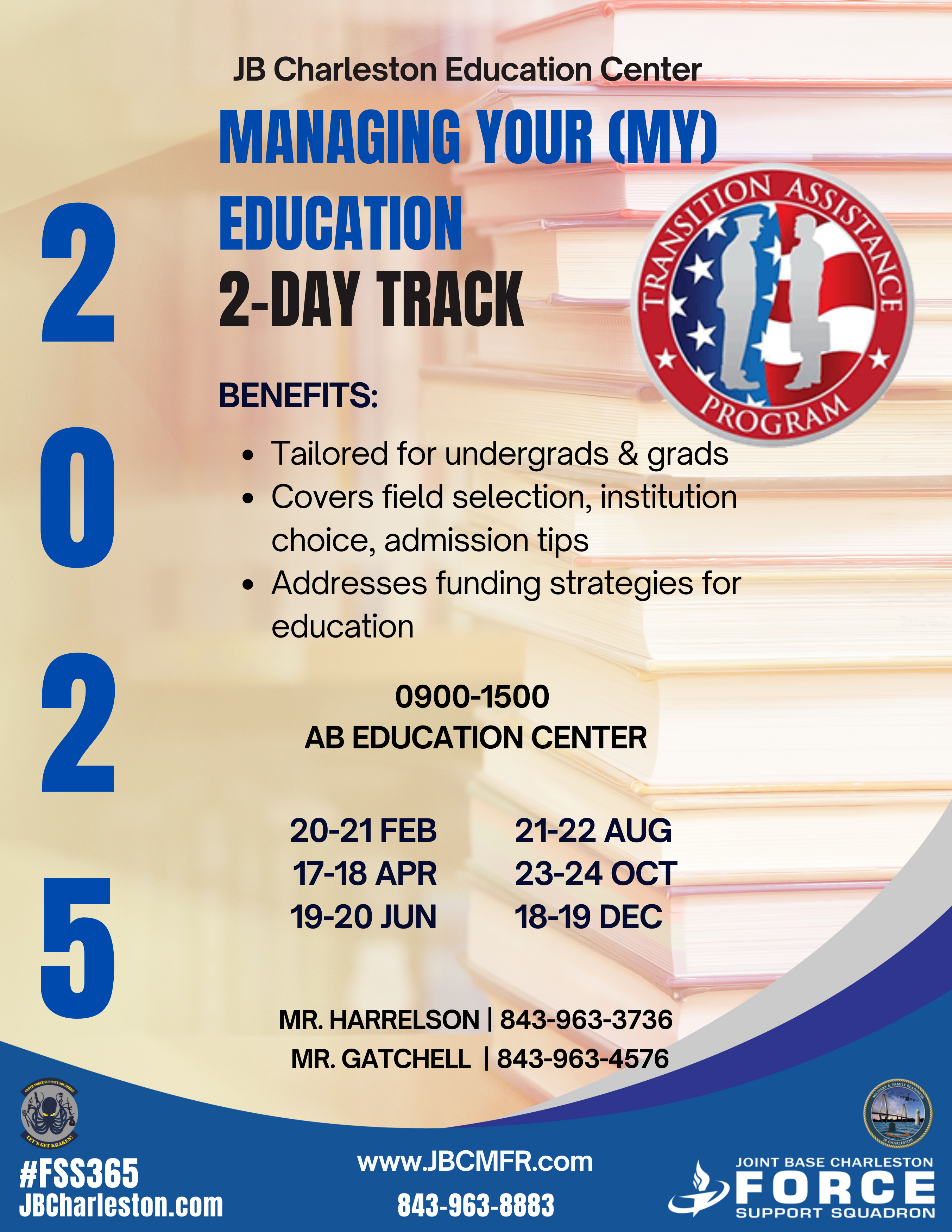
2-Day Service Member Elected Tracks: Transitioning Service Members elect a 2-day track based on their post-service goals:
Dept. of Defense Education Track
Dept. of Labor Employment Track
Dept. of Labor Vocational Track
Small Business Administration Entrepreneurship Track
STEP 4: Continuum of Military Service Opportunity Counseling (Active Component only)
Service members on active duty must receive counseling to evaluate the option of continuing military service through reserve opportunities.
STEP 5: Capstone Appointment
Must be completed no later than 90 days prior to separation or retirement.
This is the culminating event in the TAP process, where a commander or designee verifies that the service member has met all CRS and has a viable ITP. This must be completed no later than 90 days before separation or retirement. If a service member does not meet the standards, a “warm handover” to partner agencies (e.g., VA, DOL) ensures they receive further assistance.
Meeting Career Readiness Standards (CRS): All service members must achieve specific, measurable deliverables to be considered “career ready”. These standards include having a verified post-separation financial plan and completing a MOC Gap Analysis (or verifying employment/school admission).
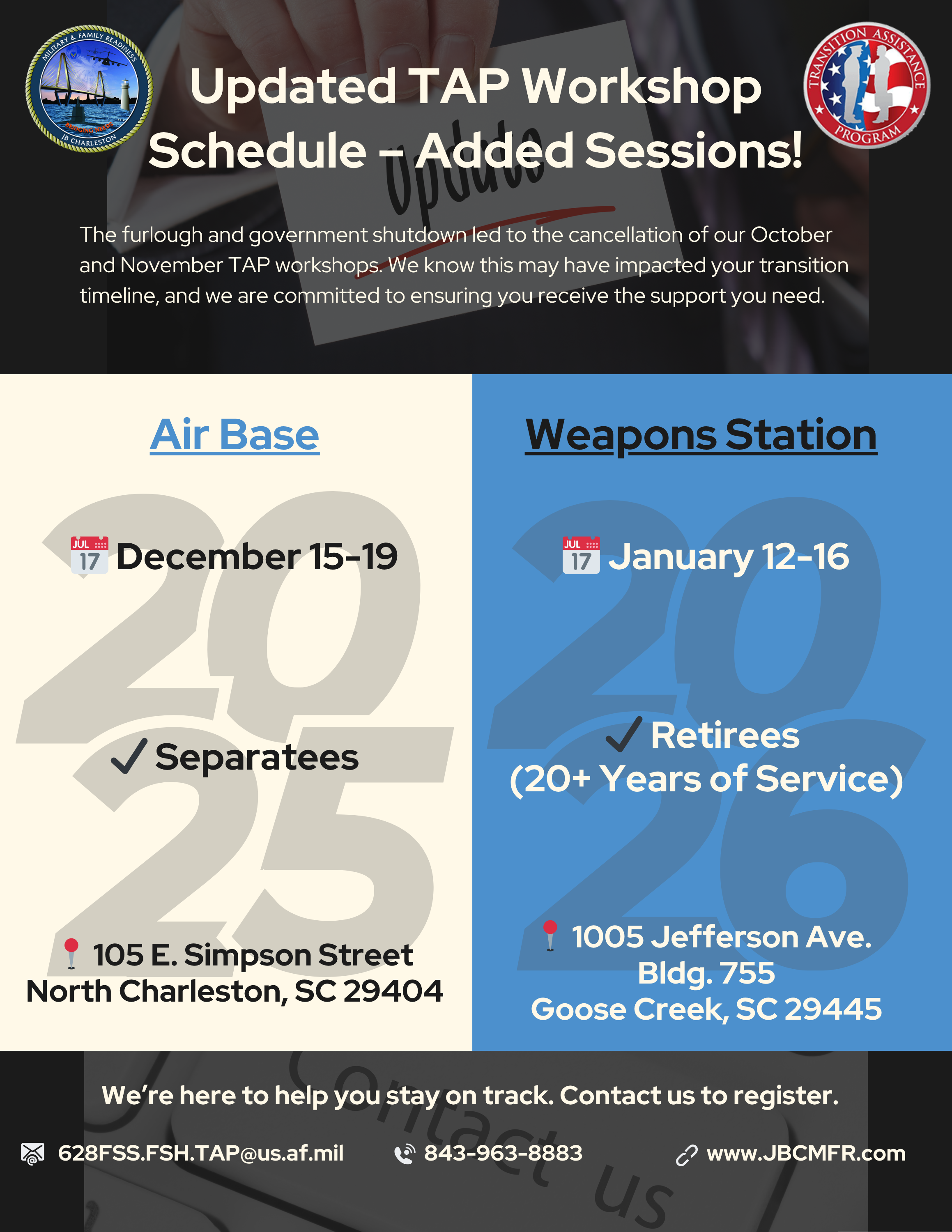
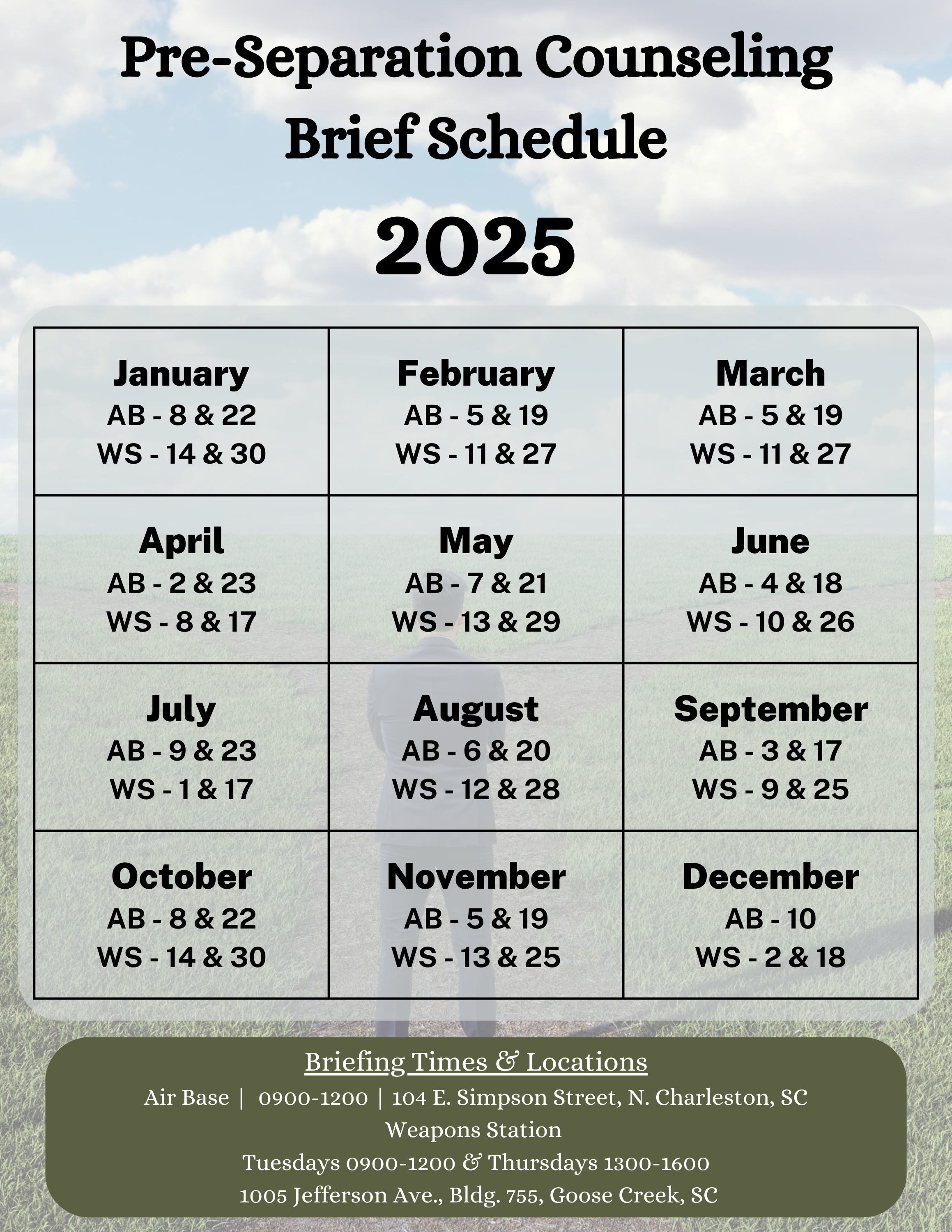
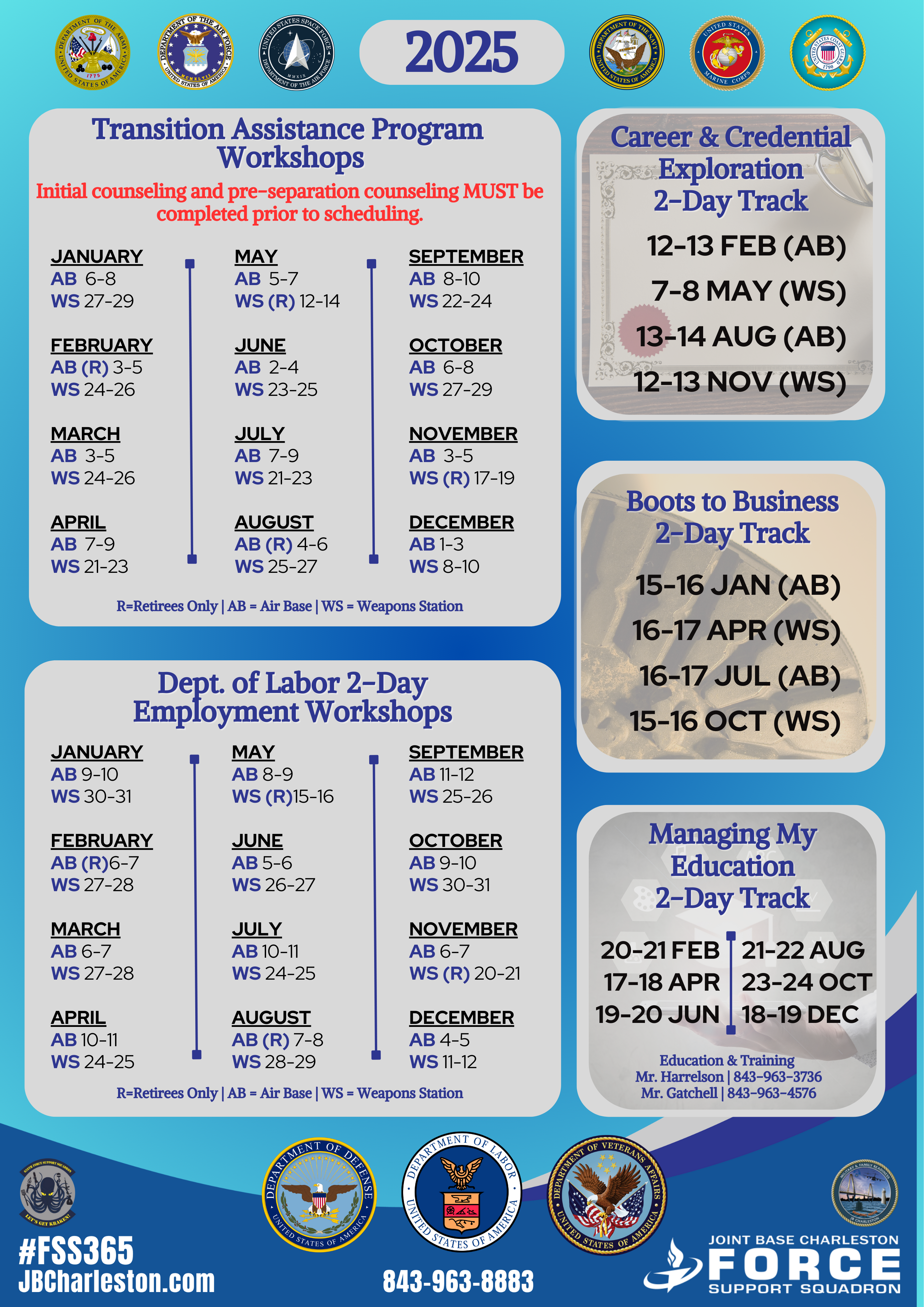
Upcoming Workshops
Click an image below to see upcoming workshop dates!



Initial Counseling
Click on the link below to learn more.
TAP Tiers
Click on the links below to learn more and download your Tier’s CRS.
.
Description: These service members are generally transition-ready, often having secured housing, employment, or college admission prior to separation. They have a clear post-military plan and require the least amount of support.
Requirements: They are required to complete the foundational, mandatory three-day TAP Core Curriculum, which includes the DoD Transition Day, VA Benefits and Services Briefing, and the DOL Employment Fundamentals of Career Transition (EFCT). They must also meet Career Readiness Standards and complete a Capstone appointment.
Description: Service members in this tier have some ideas about their future but need more assistance to make informed decisions or finalize plans. They might have a general plan (e.g., “move home with family”) but lack concrete arrangements like a secured job.
Requirements: They must complete the mandatory core curriculum and meet Career Readiness Standards. They are also strongly recommended to attend one or more of the two-day tracks (Education, Employment, Vocational, or Entrepreneurship) to help build their plan and meet specific goals. They also need to complete a post-separation financial plan and a GAP analysis.
Description: These individuals are not transition-ready and often have no solid post-military plans. This tier can also include those with specific risk factors, such as service members leaving unexpectedly on short notice or due to injury/disability.
Requirements: Tier 3 members are mandated to complete the core curriculum and attend additional supportive courses, which include one or more of the two-day tracks. They are ineligible to waive any portion of the program and must satisfy all Career Readiness Standards and the Capstone requirement. They also complete a post-separation financial plan and GAP analysis.
Pre-Separation
Click on the links below to learn more.
Workshop Participant Guides
Click on the links below to learn more.
Capstone Documents
Click on the links below to learn more.
**Note Requirements for Your Tier**
2-Day Track Participant Guides
Click on the links below to learn more.
Powerpoint slides
Click on the links below to learn more.
Other Resources
Click on the links below to learn more.
843-963-8883
The utilization of non-government websites within our website does not imply nor intend any federal endorsement.